
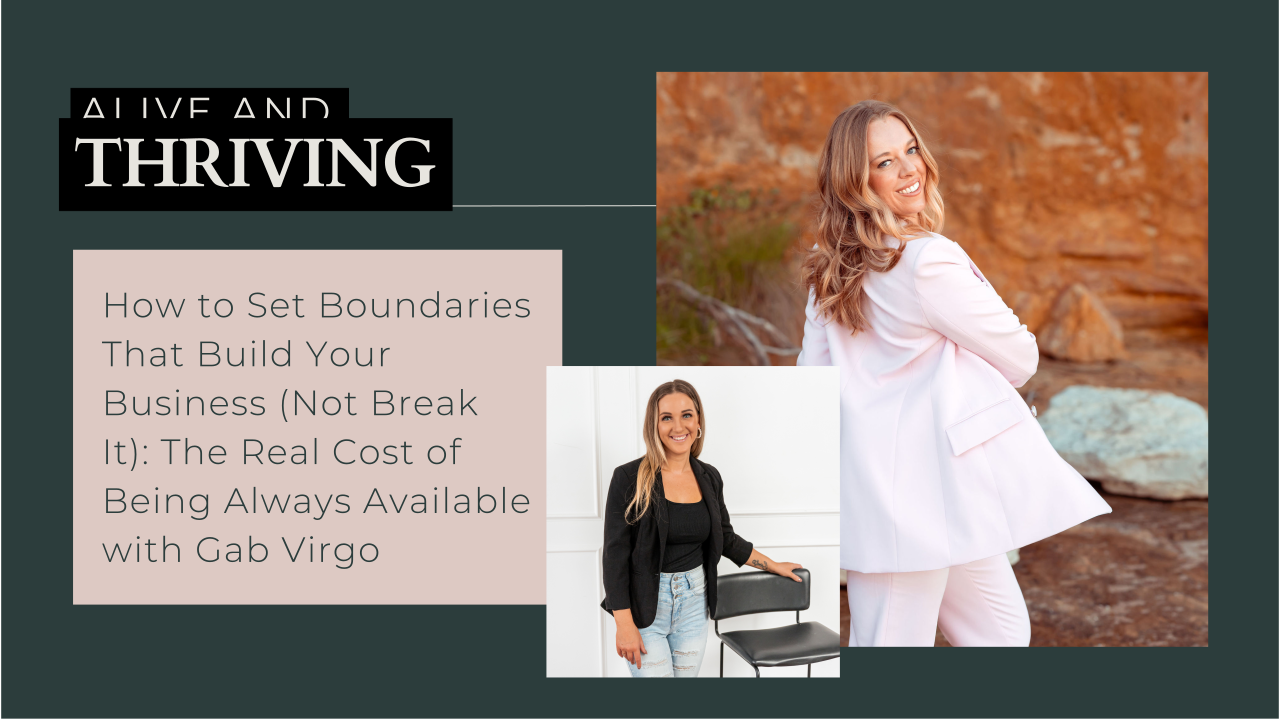
How to Set Boundaries That Build Your Business (Not Break It): The Real Cost of Being Always Available
LISTEN HERE | WATCH HERE
How to Set Boundaries That Build Your Business (Not Break It): The Real Cost of Being Always Available ft. Gab Virgo
There's a moment when you realise you're doing everything in your business. Saying yes to every client request. Available at all hours. Pulling over on the side of the road to handle a non-urgent task because someone messaged you and you feel like you have to respond right now.
You tell yourself it's what you need to do to succeed. That boundaries will come later when you're more established. That saying no means losing clients.
But what if the thing keeping you stuck isn't your lack of strategy, but your lack of boundaries?
I sat down with Gab Virgo, my long-term VA turned OBM, for one of the most honest conversations I've had on this podcast. And what she shared will change the way you think about boundaries, client relationships, and what it actually takes to build a sustainable business.

The Instagram Deletion That Became a Fresh Start
Gab's origin story is one of my favourites because it's so beautifully human.
She went to delete her personal Instagram because she felt like she was wasting too much time and energy on the wrong people, scrolling feeds that didn't make her feel good about herself.
Turns out, she accidentally deleted her business page as well.
"Hashtag good job, Gab," she laughed. "Probably not the best story to tell whilst I redo my page and try to convince people to hire me as their personal assistant, but I promise not to do it to yours."
And that post, that vulnerable, funny, completely real post, is exactly what caught my attention. I saw it, thought "Oh, she's so funny. She seems cool," and followed her immediately.
A few weeks later, when I started thinking about hiring an assistant, I went straight back to her.
This is what authentic leadership for entrepreneurs actually looks like. Not the polished, perfect, never-make-a-mistake version. But the human version that makes people feel like they can trust you because you're real.
Building a Business From Survival
When Gab started her business eight years ago, she was a new single mum with a 10-month-old daughter. Her family was interstate. Daycare wasn't an option. With a hospitality background that meant 4am finishes, working from home wasn't just a preference, it was survival.
"I started my business from survival and needed to somehow provide an income," she told me.
She jumped into a Facebook group and put it out to the world: "Hey, I'm starting a business." And she gained two or three clients immediately. She was transcribing videos back before AI did it all, sitting there typing and listening for hours.
She charged $50 an hour, which was quite high back then. She got up at 2am to do email marketing calls with clients in the US, her daughter waking up halfway through, forcing her to pause the call and go back and forth.
It was a lot of learning curves. A lot of saying yes to everything because she had to make it work.
This is what building business without burnout requires understanding. Not that you won't go through survival seasons, but that you can't stay in survival mode and build something sustainable.

The Scarcity-Driven Yes That Kept Her Stuck
For years, Gab wore a lot of different hats. Email marketing. Web design. Graphic design. Social media management. Blog writing for an education company. She did it all.
And she went on and off with her business. Part-time, full-time, part-time again. Navigating the trenches of single motherhood as her daughter grew up. Always saying yes to what clients wanted and needed, even when she didn't want to do it.
"I feel like we all kind of go through those phases, right?" she said.
Absolutely. We have to. We have to learn where our boundaries sit.
But here's what most people don't talk about: the hidden cost of those scarcity-driven yeses.
Gab got to a point where she had to leave her business and go back to hospitality. Not because the business wasn't making money, but because the clients she was working with weren't aligned. Because her boundaries weren't strong enough, so they kept getting pushed over. Because she wasn't enjoying what she was doing anymore.
"A lot of that disconnect between who I am, what I wanna be doing, and then what I was actually doing came into a really big factor," she explained.
This is what emotional resilience for entrepreneurs addresses. The capacity to recognise when you're abandoning yourself for your business, and the courage to make a different choice.
The Moment Everything Changed
Gab remembers the day really clearly. She was driving to her now-fiancé's house one afternoon when a client messaged her wanting something right then, right now.
She had to pull over on the side of the road to do it on her phone. It was a hashtag. Something that was absolutely not urgent.
"I got to that point and I was like, what the hell am I doing?" she said. "It was a weekend. I was definitely not working. But yet I had to make that a priority."
That was her breaking point.
When COVID hit and she had to leave her hospitality job, she came back to her business full-time. But this time, she made a decision.
"This is what I'm not settling for. This is my boundaries. This is the standard that I'm setting now and I'm not going below it, otherwise I'm just gonna keep going back and forwards."
This is what setting boundaries in business actually requires. Not just knowing what your boundaries are, but being willing to enforce them even when it feels uncomfortable.

The Boundary That Changed Everything
Here's what most people get wrong about boundaries: they think strict boundaries will repel clients.
Gab found the exact opposite.
"The more boundaries I set and the firmer I was on them, the more people responded well to it," she told me.
When we first started working together, we had set days. Set hours. She worked on my business on Wednesdays. We still do Wednesdays to this day.
"The more clear and open and honest I was at the very beginning, the more clients respected that," she explained. "People like when it's organised, when it's strategic, when it's not chaos."
Because here's the thing: people outsource because they don't want to feel chaotic anymore. When someone comes to Gab feeling overwhelmed, needing things done on different days at different times, she creates structure.
"Being strict with people actually calmed them down," she said. "And we were able to get 10 times more work done."
This is what sustainable service-based business is built on. Not being available 24/7. But being so clear about when and how you work that clients feel held by your structure instead of anxious about your availability.
The Client Who Messaged Hours After She Gave Birth
And then there's the story that made my jaw drop.
Gab had just given birth. Her son was in intensive care. She'd told her client she was on leave and had given her everything she needed, including video tutorials on how to onboard clients whilst Gab was away.
Hours after giving birth, the client messaged her. Not to check if she was okay. Not to send well wishes. To ask her to do an "urgent" task.
The client had all the information. She had the tutorials. But she didn't watch them. She didn't feel confident enough to do it herself.
"At the time I was like, oh my God, how dare she?" Gab shared. "But also it was like, okay, she doesn't feel good enough about herself to do this."
That was a turning point for Gab. She realised that this client had given her all the power in her business. And when Gab wasn't there, the client didn't know how to function.
This is what I mean when I talk about business from survival to success. It's not just about the service provider setting boundaries. It's about business owners not giving away their power to the people they hire.

Why Business Owners Must Understand Their Backend
One of the biggest differences between clients who stay with Gab long-term and the ones who don't last very long is this: the long-term clients understand how their business runs.
"You might not like doing it, but you understood it," Gab told me. "I know you can jump in and fix a funnel if you need to on a weekend. Or if you just want something done because you're in a rush on your own timeline."
She's right. I can. And that's intentional.
"People who understand their business and then go to outsource are gonna be a lot more successful," she explained. "Whereas if you don't understand any part of your business before you hire someone, it's all on them. And you don't have the confidence to implement it yourself."
This is why Gab now teaches service providers and business owners alike: if you want to outsource, that's great. But if you're outsourcing because you don't understand something, what happens when your VA goes on leave? What happens when they have a baby? What happens if they quit?
You're stuck with nothing and learning from scratch again.
This is what work-life balance entrepreneurs actually need to hear. Outsourcing isn't about abdicating responsibility. It's about leveraging support whilst maintaining ownership of your business.
The Ripple Effect: Boundaries at Work Create Calm at Home
When Gab set boundaries in her business, something profound shifted at home.
She was able to switch off. Her kids knew when she was working and when she wasn't. She could pick them up from school, drop them off, do all the afternoon sports. Four sports every week.
"It was a necessity for me because obviously stepping into going from one child to now five, those boundaries had to be in place for me to be able to be a mother to that many children and be present," she said.
But it wasn't just about time. It was about her nervous system.
She used to get anxious every time a client messaged her, even if it was just a casual reply to a story. "Do they need something from me now?" she'd think.
This is what nervous system regulation business addresses. The understanding that when you're always on in your business, when you're always alert, your body never gets to rest. Even if you're physically at home with your kids, you're emotionally gone.
Setting boundaries allowed Gab's nervous system to recalibrate. To know that work happens during work hours. That weekends are for family. That if someone messages her and she doesn't reply, it's not an emergency.
And here's what's beautiful: her clients respect that. Because she set that expectation from the beginning.
What Creates 100% Client Retention
One of the things I'm most proud of in my business is the 100% retention rate in my mastermind. And Gab, who sees the backend of multiple businesses, had some perspective on why that is.
"The level of connection that you have with your clients compared to what I've received in different spaces is so different," she told me. "And it honestly is a testament as to why you have 100% retention. That is nearly unheard of these days."
She's been in three different masterminds herself. Not once did she experience the level of personalisation and care that she sees me give my clients.
"I even had to follow up with one of them about my container ending because she didn't even know when it ended," Gab shared.
So what's the difference?
"You don't just ask what their name and email is. You actually ask what their goals are, what their fears are, what their favourite food is," she explained. "You get to know who they are as a human. And you check in every three to six months. You genuinely give a damn about who's in your world."
This is what client retention strategies are actually built on. Not complicated funnels or clever marketing. But genuine care, human connection, and consistency.
It's the birthday gifts. The check-ins. The "I haven't seen you in the group this week, are you okay?" messages. The flexibility when someone needs a different payment plan.
"You don't just have processes and automations," Gab said. "You go that next step deeper."
And that's the difference between clients who stay for years and clients who churn through containers every few months.
The Identity Shift: From Assistant to Leader
What I loved most about this conversation was hearing Gab talk about her own identity shift.
For years, she saw herself as "just an assistant." Someone who checked off to-do lists and ran errands.
But she'd seen so many different strategies behind the scenes. She'd worked with beauty specialists, hairdressers, mindset coaches, business coaches, copywriters, builders. She'd seen businesses flop and businesses hit millions.
"I realised I have so much more value to give than just checking off a to-do list," she said.
That's when she started stepping into the OBM role. Into leadership. Into sharing her opinion.
"It took me a really long time to get to that and to be able to share that as well," she admitted. "Because a lot of people do just see an assistant as someone who's gonna run their errands."
But her identity had shifted. She knew she was good at what she did. She had wisdom to share. She had experience that mattered.
The challenge? Her business hadn't caught up yet.
She's now in that pivot. Coaching service providers who want to stand out, set boundaries, and build businesses that don't drain them. Teaching them what she's learned over eight years so they don't have to go through all the same hurdles and mistakes.
This is what service provider boundaries create. Not just better work conditions, but the confidence to step into leadership and own your expertise.

What This Means for You
Whether you're a service provider learning to set boundaries, or a business owner learning not to give away your power, here's what I want you to take from this conversation:
Boundaries aren't selfish. They're strategic.
Gab's strictest boundaries attracted her best clients. The ones who respected her time. The ones who stayed long-term. The ones who referred others to her.
You can't build sustainably from survival mode.
Yes, you might go through survival seasons. But you can't stay there and expect to thrive. At some point, you have to make the choice to set standards and stick to them.
Understanding your business backend is power.
Don't outsource to avoid learning. Outsource to leverage your time. But always maintain ownership of how your business works.
Your nervous system needs you to set boundaries.
If you're always on, always available, always alert to the next message, your body never gets to rest. That's not sustainable for your health, your relationships, or your business.
Genuine care creates retention.
Whether you're a service provider caring for clients or a coach caring for your community, people stay where they feel seen, known, and valued as humans.
Ready to reclaim your authority in your business and set boundaries that actually attract better clients? If you're a service provider, VA, or OBM who's ready to stop saying yes to everything and start building sustainably, reach out to Gab Virgo on Instagram @virtually_gab. She's now coaching others through exactly what she's learned over eight years in business.
And if you're a business owner who wants to learn how to hold your clients with the kind of care that creates 100% retention, my Visibility Rebirth program is launching in February. This is where we do the identity work that allows you to lead with boundaries, own your authority, and build a business that doesn't cost you yourself. DM me on Instagram @jessica.read.ilc to learn more.
Because here's the truth: you don't have to sacrifice yourself to build something successful. You just have to be willing to set the boundaries that protect your energy, your time, and your capacity to show up as the leader your business needs you to be.